Showing posts with label peas. Show all posts

Wednesday, 24 August 2011

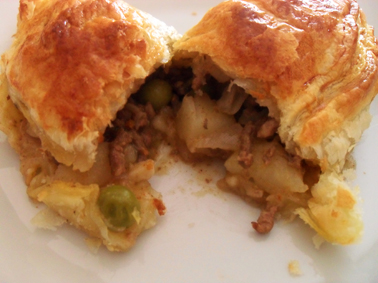
No. 25 - Bolivia’s Saucy Soggy-Bottomed Saltenas!


Saltenas are perfect snack for those complete write-off days, when you’re too hung-over to leave and would rather stay home ‘crawling’ the couch. They’re loaded with carbs and meat, salty, spicy and of course sumptuously fatty - a hangover cure in a mouthful. This was of course no use to us, as once again we discovered too late that saltenas take a little longer to prepare than we were willing to wait. A whole lot longer, in fact.  Turns out the mixture needed a quiet night in (the fridge) to quite literally, chill - much like ourselves. Instead, we had them the next day for lunch before embarking on our next hangover.

Saltenas

Choosing to make saltenas, was really just another excuse to eat empanadas (see Argentina), under another name and another country. They are pretty much exactly the same, but the filling is much saucier. You can get away with dodgy pastry sealing and greedily overstuffing empanadas, but when it comes to saltenas you’re better off taking your time and doing it right. Needless to say, I ended up with a baking tray full of burnt filling and some seriously soggy-bottomed saltenas. Not to worry, like I’ve said before, in my eye’s there is absolutely nothing you can do to ruin puff pastry. And the puff pastry is a total cheat, by the way (see Albania) so if you want the authentic recipe for saltena pastry I suggest you google it.

Serves 4 – 6 (really 6 – 8)

a little oil for frying
1 onion, chopped
4 cloves of garlic, chopped
2 potatoes, peeled and diced quite small
1 cup of peas
225g minced beef
1 cup of stock (I used a stock cube)
½ envelope of gelatin
1 tbsp black pepper
1 tbsp cumin
1 tsp cayenne
ready made puff pastry, rolled out as thin as possible
1 egg, for brushing

Fry the onion and garlic in a little oil until softened. Add the meat, spices and fry until browned. Add the stock and simmer for roughly 30 minutes.

In another pan of salted boiling water, cook the potatoes and peas until tender.

Add the potatoes and peas to the meat mixture, along with the gelatin dissolved in a little water. Stir very well to ensure everything is thoroughly incorporated. Allow to cool and let chill in the fridge over night.

The next day…

Roll out the puff pastry and cut out as many circle as you can (I cut around a little saucer). Dollop a tablespoon or so of the cold filling onto the centre of each pastry circle. Brush around the edges with beaten egg and (attempt to) seal the edges using your thumb and fingers, making an empanada half moon shape. Lay on a baking tray, brush with more beaten egg and cook in a preheated oven at 200 degrees celsius for roughly 15 minutes, until the pastry is golden brown. Say a prayer the filling doesn’t leak! Scoff hot.

Wednesday, 29 June 2011

No.8 – Antigua and Barbuda put a foot in it!


Fungi and pepper pot conjures up delicious images of a steamy clay pot full of mushrooms and peppers - at least that’s what I was looking forward to. In reality fungi and pepperpot is a ‘simple’ stew similar to any other stew, reiterating that every country in the world adds meat and veg to water and comes up with pretty much the same thing.

Fungi (pronounced foon-ji) are dumplings made from a cornmeal paste that is thickened with okra. In Antigua and Barbuda it is eaten with pepperpot, a pork and vegetable stew that contains everything except the kitchen sink. All the pepperpot recipes I found added all sorts of piggy parts including skin, bones, snout, feet and ears. I settled with adding a couple of pigs’ totters but I did remove them after about an hour. There was no way they were going to be eaten (pigs trotters are skin, fat and bone and smell pretty piggy) however they did give the stew a meatier flavor. I’m sure that you could leave them out (I like the novelty of weird animal parts) but I would recommend adding a decent meat stock instead of water if you are.

The verdict - fungi and pepperpot is a tasty stew, similar in fact to an Irish stew, although notably it does have much more flavor (due to a hell of a lot more ingredients, and a chili). But what is a stew without a spud? I craved a potato and not the funny fungi, although the butternut squash did the job well enough.

I liked this dish because this is the kind of food that all nations have in common - a pot where you throw in a few scraps of meat, whatever vegetables are lying around and season with any spices you can get your hands on – and bobs your uncle – pretty much the national dish of any country in the world. Have I cracked any major secrets of gastronomic world? Not likely, but I think I’ve definitely made a fairly basic (and obvious) discovery.  I feel I’ll be eating a lot of stews in the upcoming months!

Fungi

Fungi, fungi, fungi. The best part of fungi is how fun-gi it is to say! It tastes of cornmeal and its texture is like slippery paste, this is of course exactly what it is, but if you are going to embark on making the stew, embark on making the fungi (if only for the name). The okra struck me as bizarre but it is actually an essential ingredient because when you cook it releases a kind of green slime, which is what holds the fungi together. Do not leave it out as I nearly did.


Serves 3

1 and ½ mugs of water
1 mug of cornmeal
3 okra, sliced into rounds
salt to taste (I added quite a bit as you can imagine it tastes of nothing otherwise)
butter, to grease a bowl

Cook the sliced okra is the boiling water until tender. The water will go slightly green and become slimy. Remove a mug full of water and reserve. Add the mug of cornmeal to the remaining water and okra and mix up as best you can. Then keep adding the reserved mug of water, bit at a time. The idea is that the cornmeal gets cooked so keep that in mind – keep kind of mushing it together so everything gets a chance to cook from the heat of the pan. It should take between 5 and 8 minutes altogether to cook the cornmeal.


When all the water has been incorporated, grease a bowl with a little butter and dollop a spoonful of the paste into the bowl. Try and cover the spoonful with a little butter and then pick it up and shape into little dumplings. The butter will stop your hands from getting covering in goo (on second thought you could maybe just grease your hands!) Serve with the pepperpot


Pepperpot

What can I say - pepperpot is a good old-fashioned stew – perfect, hearty comfort food. It’s as simple as bung it all in and let it do its thing. This recipe is very adaptable so don’t feel you need to add absolutely everything (although the okra thickens the stew), similarly feel free to add absolutely anything you have lying around (the more meat the better). Like I say, pigs feet are optional but then so are snout, ears, cheek and God knows what else.

Serves 3

Vegetable oil
100g bacon, roughly chopped
100g minced beef, made into little meatballs
2 pigs feet, optional
Vegetable oil
1 onion, chopped
1 garlic clove, chopped
2 cloves
2 tbsp tomato ketchup
a few sprigs of thyme
1 birds-eye chili, seeds left in, chopped
1 aubergine, cut into cubes (neither peeled nor salted)
a handful of okra, halved
½ butternut squash, peeled and cubes
a handful of frozen peas
half a bag of baby spinach
lots of salt and pepper

Heat the oil in a large pot and fry off the little meatballs and bacon pieces until brown. If you don’t have room in this pan which you inevitably won’t, brown of the pigs feet in another pan. To the bacon and meatballs add your chopped onion and garlic and sauté for a few minutes. Next add absolutely everything (this includes the pigs feet), excluding the peas, squash and spinach. Cover the vegetables with water. Simmer for about an hour.


After an hour remove your feet and skim of any excess fat. Continue to simmer for an hour. Check the seasoning – you do not want a bland stew!

After another hour add the butternut squash and peas. (This is when I got on with the fungi)


After fifteen minutes, when the squash is cooked stir in the spinach and serve with the fungi.


Monday, 27 June 2011

No.6 – Thrilla in Anguilla!


When Oddsocks Revival impromptly returned from the Enniscorthy Strawberry Festival, what was originally intended to be a simple pigeon-peas and rice dinner (which would have been extremely boring and bland), became delicious shrimps in a coconut sauce with pigeon-peas and rice. If the boys had returned to only rice and beans my reputation would have been fleeting and so, Teresa and I headed out late that evening in the still ridiculous heat to find some fresh shrimp and plenty of limes for the eagerly anticipated mojitos.

Two hours and zero mojitos later we were still beheading, tailing and deveining our kilo of shrimp, a less than pleasant job poor T had not signed up for.  I for the first time understood why people just buy them already prepared and swore never to buy shrimp whole again. This was until I learned the absolute joy of the stock made from simmering the shells. Turns out there is more flavor in one shell than in the flesh of a million shrimp (a slight exaggeration maybe) so if you are going to the trouble of buying them whole, for Gods sake make a stock. I literally could not believe how delicious it was and mixed with coconut milk - I could have, and truth be told did, eat it with a spoon.

Apologies for the lack of photos and the hilarity of the photos that were taken. (I got a little carried away with being masterchefy, hence the ridiculous tower of rice, which took no more than two attempts!) I blame the booze for my temporary insanity.

Pigeon-peas and Rice (or Black-eyed Beans and Rice)

The national dish of Anguilla is pigeon peas and rice - I must stress that this is pigeon-dash-peas and rice and not pigeon and peas and rice! I however couldn’t get my hands on any pigeon-peas but had read that you can substitute them with black-eyed peas. When overcome with a billion types of peas and beans in the ethnic food store, I of course, mistook black-eyed peas for black-eyed beans and so, in reality the dish below is black-eyed beans and rice and not pigeon-peas and rice - my mistake on many accounts. This is not the most exciting dish. Rice and beans is after all just rice and beans.

Serves 8

1 onion, chopped
3 rashers of bacon, chopped
2 cloves of garlic, minced
1 tsp ground cumin
400g black eyed beans, presoaked for an hour (obviously use pigeon peas if you can)

400g rice
4 or 5 spring onions, sliced
a couple of sprigs of fresh thyme
bunch of parsley, chopped
salt and pepper
olive oil

Throw away the water that the beans were soaked in and simmer until the beans are tender. Roughly forty minutes or so but you just have to keep tasting them. I also skimmed off the scum.

Cook the rice as you would normally.

Fry the onion, garlic and bacon in a little oil for about ten minutes. Then throw in the cooked rice and cooked beans, cumin, spring onions, the leaves of the sprigs of thyme, parsley and season with salt and pepper and mix the whole shebang together.  And there you have it – beans and rice.

Coconut Shrimp

This is one for the shellfish lovers. It took more effort to deshell the shrimps than I would have like, but if you have the patience and aren’t too squeamish about brains and intestines etc. and love seafood this is worth giving a go. It is intensely shellfishy even before you add the actual shrimps.  Beware: this will not work if you don’t make your own stock so if you are considering using prepared frozen prawns – don’t. If I were doing this again I would just serve it with plain rice and a simple salad. Yum!

Serves 6

I kg of shrimp, whole
juice of 1 lime
2 cloves of garlic, minced
1 red bell pepper, cubed
2 onions, thinly sliced
½ can of chopped tomatoes
1 and ½ cans of unsweetened coconut milk
1 tsp cornflour
 a few spring onions, sliced
some chopped parsley

                                
Peel and devein your shrimp. Put the shrimp in one bowl squeeze of the juice of a lime. Set aside. Put the shells in a saucepan, cover with about four cups of water and simmer for 20 minutes. The shells go an illluminous pink colour and so does the water. It starts smelling seriously seafoody.  Sieve the stock and discard the shells.


Fry up the peppers, onion and garlic until soft. Next simply throw in the coconut milk, tinned tomatoes, about half the shrimp stock (or as much as you like really) and stir in the cornflour. Leave to simmer for about ten minutes or until you get the desired consistency which I would describe as like a seafood chowder. Next add the shrimp and just wait until they have turned pinky – literally 2 minutes. Garnish with the spring onions and parsley ( I forgot this for the photos) and serve with a bottle of seriously hot sauce!